“When I run after what I think I want, my days are a furnace of stress and anxiety; if I sit in my own place of patience, what I need flows to me, and without pain. From this I understand that what I want also wants me, is looking for me and attracting to me.” -Rumi
The days and months of living and working through the Covid-19 pandemic changed the way I woke and breathed. I was not aware of the small and gradual changes, until I looked back upon the habits that started forming in my life.
Uncertain if schools were open or closed, if I was working from home or if I was commuting to work, I allowed my cell phone to creep beside my bed. I fostered a new habit of checking both the news feed and my email before my feet hit the floor in the morning. The uncertainty of “the day” loomed for many months, then it crept into years of rapid change. Teachers are routine freaks. Our job is located at a school. Most of us have been in and part of school life since we were 5 years old: elementary, secondary, post-secondary, grad school, then teaching. School is a routine that we have lived with our whole lives. We arrive at work and our days are scheduled: we work, eat and pee according to a bell. In one week, a lifetime routine was upended. The upheaval lasted years. I think based upon personality traits and/or the amount of years that they have been teaching, some teachers have felt this impact more than others.
I have a continual flow of thoughts and conversations in my mind. Since the pandemic, these voices would not shut-up. Mental peace was lost. The routine shift during the Covid-19 pandemic was one incident that started to shrink my “Window of Tolerance”. I started waking up to these conversations, and I was having trouble stopping the flow of thoughts at bedtime. I have started to make conscious daily choices to start opening this window. These decisions started small and have continued to compound into a new morning routine and have resulted in a new way of thinking. I believe that these new routines have started to offer healing to my soul, body and my professional outlook.
First, I have started to be very intentional about how I start my day. I have changed the sound on my morning alarm to be a soft calming chime, rather than a disruptive, heart-pounding alarm. I have learned that how we wake paves the path of our day. My alarm is on my phone, but I choose to not read my texts or email or news, etc on my phone until I complete my morning routine. Before I interact with anyone (or even take care of the dogs) I find a quiet place to feed my soul.
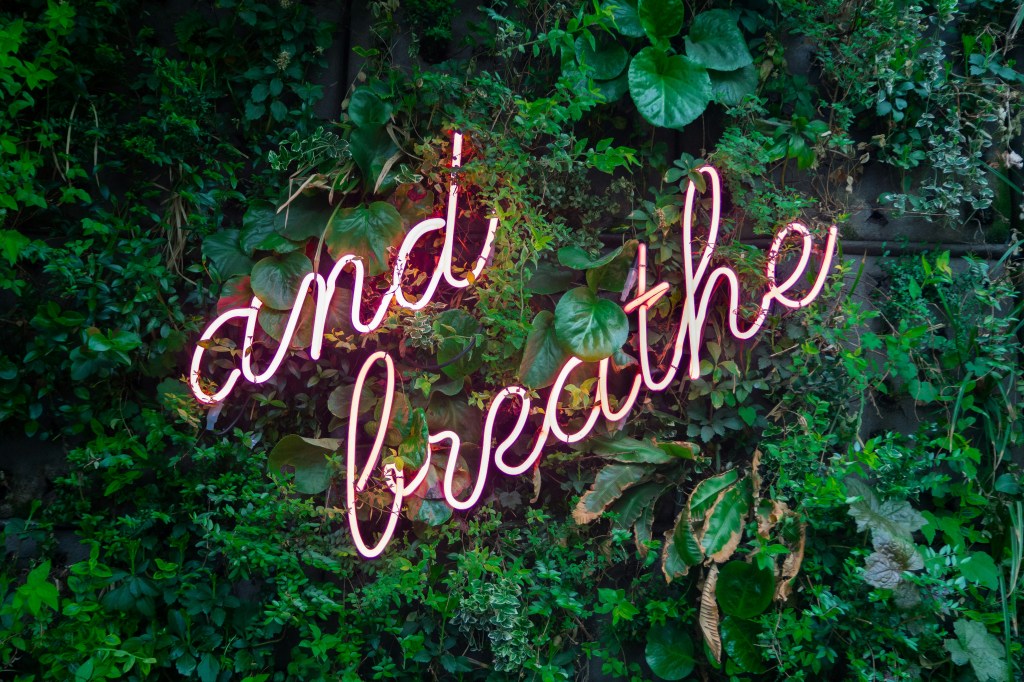
Secondly, conscious breathing and meditation is the nourishment for my soul. It has been a foundational root for finding my calm. I started a journey with a 40 day commitment to this new routine, with accountability. I have learned that we can do anything for two weeks, but it is approx day 15 where things go south and motivation weakens. Both the accountability and the choice to make this change a habit were critical to my ability to “stick with it”. After 40 days, I have continued this routine as a daily goal. I have been practising for over a year now. It is not a lifetime goal or a yearly goal, but each night I choose to awake the next morning with an intent to make time for my morning solace. After a year, I now crave and recognise how important it is to quiet myself before my day starts.
Meditation and breathing techniques do not stop the chatter. Tsoknyi Rinpoche explains that meditation is a way to open the front door & back door of your mind and start to recognise what you are thinking and feeling. Meditation teaches you restraint. You learn not to “serve your thoughts tea”. You allow feelings/thoughts to pass through from the front door to the back door, and they are not permitted to linger. Every morning is a check-in point for me to acknowledge what conversations are happening. Some days the mental chatter is manic and other days it is calm and clear. Starting my day with an awareness of how noisy my mind is has been an extremely beneficial tool to help me function calmly in the world. It has allowed me to recognise that I can start responding to circumstances, rather than reacting.
I have found meditation/breathing to be similar to a clearing or purifying process. For example, clay mixed with water is murky and appears dirty. If a mixture of clay and water is left to stand still and undisturbed the water rises to the top, clarifies, and the clay settles to the bottom of the bucket. The visual of the clay water may work the same as our minds. Clarity of the mind is present in us, but we just have to calm ourselves, disconnect, and find stillness from our overly stimulating lives to find the purity and clarity of the water.
I have found that mediation is a way to help me clear my muddy mind. Breathing is a bridge between my mind, body and soul. Breathing brings me into the present. I cannot breathe in the past or the future. I can only take a breath in the moment. Humans are extremely unique and varied, so the breathing that will bring each human into the present is likely just as varied. My muddy mind clears when I spend time in quiet morning meditation, but other ideas could include the following:
- Morning Pages-a concept designed by Julia Cameron that embraces writing your thoughts as soon as you wake for a set duration of time;
- Lifting Weights-there is conscious breathing and counting that can combine to be a meditative flow of expended energy;
- Exercising-again rhythmic breathing and often a timed activity (walking, running, swimming, biking, etc).
If we all need to nourish our bodies in different ways, with different caloric intakes (based upon the metabolism of our bodies, preferences and activity levels), why would the diversity of our “soul nourishment” be different? If there are parallels between physical nourishment and soul nourishment, then we can start by identifying that you can go a long time without food and survive. I know a lot of soul-starving teachers. It is important to start recognising that your soul is hungry. Students & parents are currently energy-vampires (more on this in future posts). So, as teachers, we are alive, but barely. Find your soul-food. Don’t wait until the weekend, holidays or summer break to re-fuel. Do daily fuels. Your body needs food every day, so your soul needs nourishment daily. Figure out what you need and start setting a daily goal to get it.
The more transparent we are about our journey and the more that science uncovers about how our nervous systems heal, the more opportunities teachers will have to experience appetisers of soul nourishment. Hopefully, after a few taste-tests and recognising how undernourished we are, we can all find activities that make the taste-buds of our soul sing.
Opening the Window of Tolerance Challenge Two: Find something that you can do everyday that will nourish your soul. Give yourself this gift for 10 or more minutes everyday, before the world bombards you. Make it a habit (like brushing your teeth).
 Post covid teaching:
Leave a comment